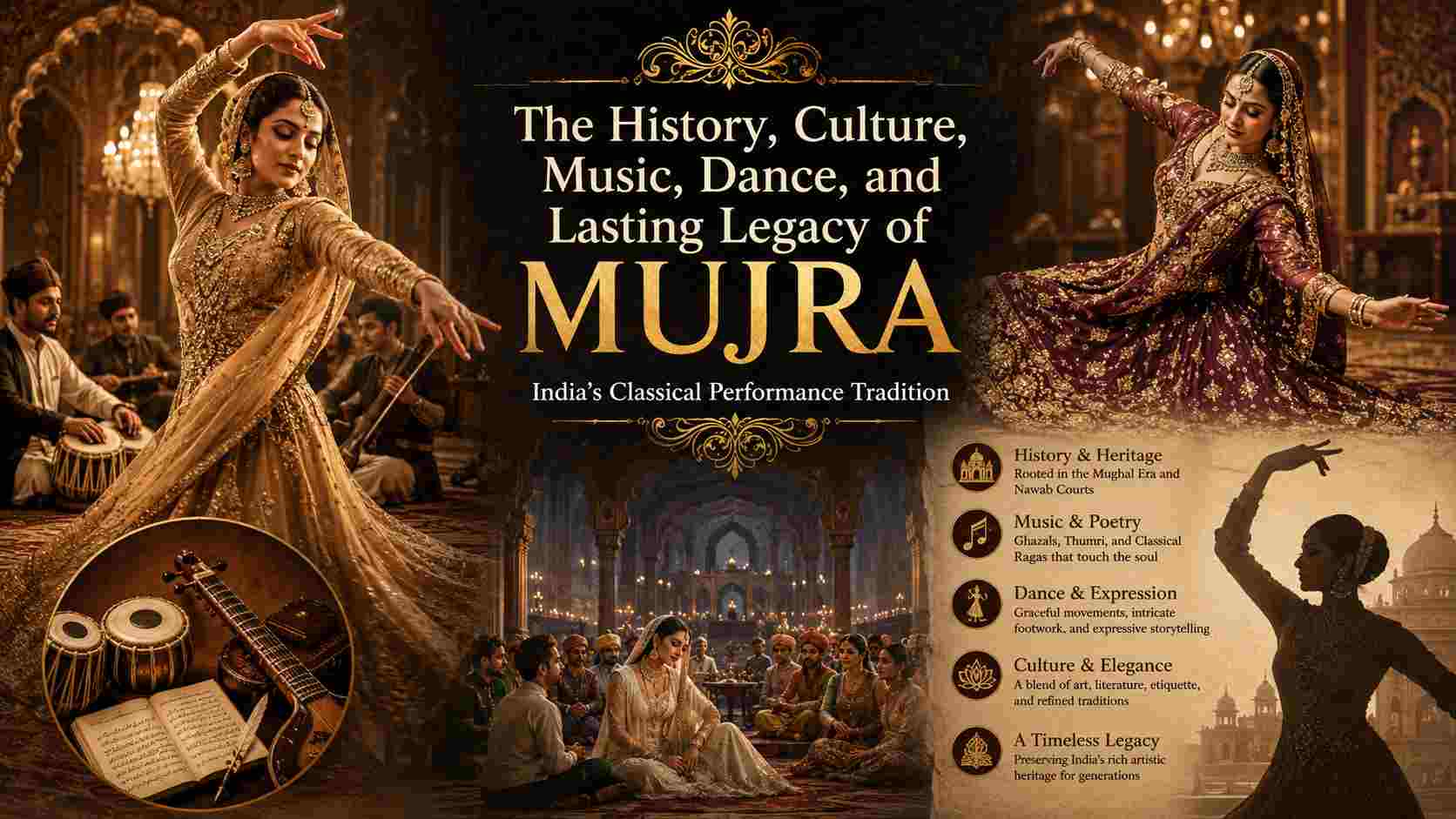
Mujra is one of the most elegant and historically significant classical performance traditions of the Indian subcontinent. Known for its graceful dance movements, expressive storytelling, refined etiquette, and mesmerizing music, mujra originated during the Mughal era and flourished in the royal courts of North India. Over centuries, it evolved into an artistic expression that combined Kathak dance, Urdu poetry, Ghazal singing, classical music, and sophisticated cultural values.
Today, mujra continues to attract historians, dancers, musicians, filmmakers, and cultural enthusiasts who wish to understand India’s rich artistic heritage. While modern media sometimes portrays mujra in a simplified or sensationalized way, its authentic roots lie in classical performance, literature, and royal entertainment rather than contemporary stereotypes.
This article explores the complete history, evolution, significance, costumes, music, famous performers, and influence of mujra on Indian culture.
What Is Mujra?
Mujra is a traditional dance and musical performance that originated in the Mughal courts during the 16th and 17th centuries. It was primarily performed by highly trained female artists known as tawaifs, who were respected not only for their dance skills but also for their expertise in classical music, poetry, etiquette, literature, and conversation.
A traditional mujra performance typically includes:
- Classical Kathak-inspired dance
- Urdu Ghazals
- Thumri singing
- Classical ragas
- Delicate facial expressions
- Graceful hand gestures
- Rhythmic footwork
- Storytelling through dance
Unlike common misconceptions, authentic mujra was considered an elite art form performed before kings, nawabs, nobles, poets, and distinguished guests.
The Origin of Mujra
The word “mujra” comes from the Persian language and originally referred to a respectful greeting or gesture of salutation before royalty.
During the Mughal Empire, especially under emperors such as Akbar, Jahangir, and Shah Jahan, performing arts received tremendous royal patronage. Music, dance, poetry, and literature flourished, leading to the development of mujra as a sophisticated court performance.
Major cultural centers included:
- Delhi
- Agra
- Lucknow
- Lahore
- Hyderabad
Among these, Lucknow became the heart of mujra during the rule of the Nawabs of Awadh.
The Connection Between Mujra and Kathak
Many scholars believe mujra evolved alongside Kathak, one of India’s eight classical dance forms.
Kathak dancers traditionally narrated stories from mythology using expressive movements and rhythmic footwork. As Kathak entered Mughal courts, Persian aesthetics, Urdu poetry, and royal elegance influenced the performances, giving rise to the refined style recognized as mujra.
Both styles share several characteristics:
- Intricate footwork
- Spins (Chakkars)
- Hand gestures
- Facial expressions
- Rhythmic precision
- Classical music accompaniment
However, mujra places greater emphasis on courtly elegance, poetic interpretation, and intimate performance settings.
The Role of Tawaifs in Indian Culture
Tawaifs were among the most educated women of their time.
Their training often included:
- Classical dance
- Hindustani classical music
- Urdu literature
- Persian poetry
- Etiquette
- Conversation
- Musical instruments
- Calligraphy
Many royal families even sent young princes to learn manners, poetry, and refined social etiquette from respected tawaifs.
This demonstrates that their role extended far beyond entertainment—they were custodians of culture, language, and the arts.
Mujra During the Mughal Era
The Mughal courts elevated mujra into an elite cultural tradition.
Performances often took place during:
- Royal celebrations
- Festivals
- Weddings
- Diplomatic gatherings
- Poetry evenings (Mushairas)
- Cultural festivals
Musicians accompanied dancers using instruments such as:
- Tabla
- Sarangi
- Harmonium
- Sitar
- Santoor
- Pakhawaj
The atmosphere was intimate, artistic, and focused on appreciation of music, poetry, and dance.
Lucknow: The Cultural Capital of Mujra
Lucknow is widely regarded as the birthplace of the refined mujra tradition.
Under Nawab Wajid Ali Shah, the arts flourished. The nawab himself was a patron of music, dance, theatre, and poetry, encouraging performers to develop increasingly sophisticated artistic styles.
Lucknow became famous for:
- Kathak
- Ghazals
- Thumri
- Urdu poetry
- Classical music
- Royal etiquette
- Elegant architecture
- Cultural refinement
Even today, Lucknow remains synonymous with traditional mujra culture.
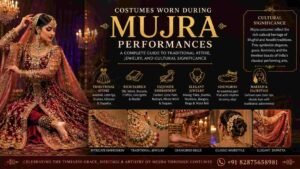
Costumes Worn During Mujra Performances
Costumes are an essential part of mujra’s visual appeal.
Traditional attire often includes:
- Anarkali dresses
- Lehenga
- Churidar
- Dupatta
- Embroidered fabrics
- Silk garments
- Velvet costumes
Jewelry typically features:
- Jhumkas
- Maang tikka
- Bangles
- Anklets (Ghungroo)
- Nose rings
- Necklaces
The overall appearance reflects elegance rather than extravagance, complementing the graceful movements of the dance.
Music Used in Mujra
Music forms the soul of every mujra performance.
Common musical styles include:
- Ghazal
- Thumri
- Dadra
- Kajri
- Classical ragas
- Semi-classical compositions
Popular instruments include:
- Tabla
- Harmonium
- Sarangi
- Sitar
- Flute
- Tanpura
The rhythm and melody guide the dancer’s expressions and movements, creating a harmonious blend of music and storytelling.
Urdu Poetry and Mujra
Urdu poetry is deeply connected with mujra.
Many performances interpret verses by celebrated poets such as:
- Mir Taqi Mir
- Mirza Ghalib
- Daagh Dehlvi
- Faiz Ahmed Faiz
Themes often explore:
- Love
- Separation
- Beauty
- Longing
- Devotion
- Nature
- Human emotions
The dancer expresses these poetic ideas through subtle facial expressions and graceful gestures.
Mujra in Indian Cinema
Indian cinema has played a significant role in preserving the visual style of mujra.
Classic films featuring memorable mujra-inspired performances include:
- Mughal-e-Azam
- Pakeezah
- Umrao Jaan
- Dedh Ishqiya
These films introduced generations of audiences to the costumes, music, poetry, and aesthetics associated with this art form, while also shaping popular perceptions of mujra.
The Legacy of Mujra Today
Although the social context surrounding mujra has changed over time, its artistic legacy continues through classical dance academies, cultural festivals, music performances, and historical research. Elements of mujra can still be seen in Kathak recitals, ghazal concerts, and theatrical productions that celebrate the cultural heritage of the Indian subcontinent.
Modern scholars increasingly emphasize understanding mujra within its historical context—as a refined courtly art that combined dance, music, literature, and etiquette—rather than through later stereotypes.