
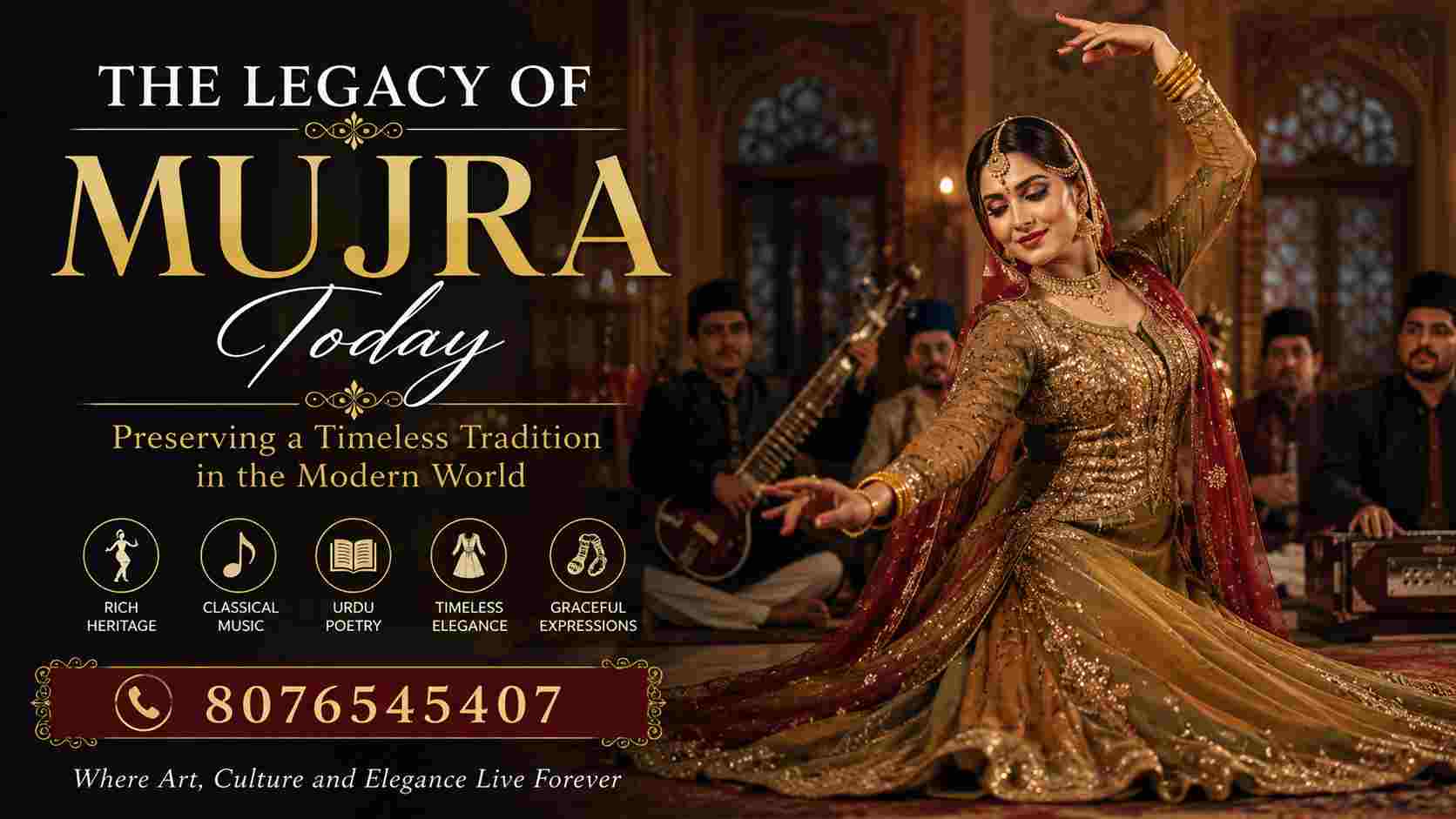
The legacy of Mujra continues to inspire historians, artists, dancers, musicians, and cultural enthusiasts across the world. Once performed in the magnificent courts of the Mughal Empire and later in the elegant salons of the tawaifs, Mujra represented far more than entertainment. It was a refined blend of classical dance, expressive storytelling, Urdu poetry, etiquette, music, and sophisticated artistic expression. Although the social and political landscape of India has changed dramatically over the centuries, the cultural influence of Mujra remains visible in contemporary performing arts, cinema, fashion, and heritage preservation. Today, discussions surrounding Mujra increasingly focus on recognizing its artistic contributions while separating historical misconceptions from the remarkable legacy left behind by generations of accomplished performers.
The Historical Foundation of Mujra
To appreciate the legacy of Mujra today, it is essential to understand its historical roots. Mujra flourished during the Mughal era, where highly trained performers known as tawaifs entertained members of royal courts and aristocratic families. These women were respected for their mastery of classical dance, Hindustani music, Urdu literature, poetry recitation, and refined manners.
Training often began at an early age and required years of dedication. A complete Mujra performance demanded technical precision, graceful movements, emotional storytelling, rhythm, and a deep understanding of music. Rather than being merely dancers, many tawaifs became influential cultural figures who preserved artistic traditions that might otherwise have disappeared.
This rich historical foundation continues to shape how scholars and artists interpret Mujra in the twenty-first century.
Mujra as a Living Cultural Heritage
Today, many historians consider Mujra an important part of India’s cultural heritage. Although traditional performances are much less common than they once were, the artistic techniques developed within Mujra continue to influence numerous forms of classical and semi-classical dance.
Researchers studying Indian performing arts frequently explore Mujra to better understand the evolution of Kathak, Hindustani classical music, Urdu poetry, and courtly etiquette. Museums, academic institutions, documentaries, and cultural festivals increasingly acknowledge the historical significance of this unique performance tradition.
The renewed appreciation of Mujra reflects a broader effort to preserve India’s diverse artistic heritage for future generations.
The Influence of Mujra on Kathak
One of the strongest aspects of Mujra’s legacy is its close relationship with Kathak. Many graceful movements, expressive facial gestures, intricate footwork, elegant spins, and storytelling techniques associated with Mujra originated from or developed alongside classical Kathak traditions.
While modern Kathak is primarily presented as a classical dance performed on cultural stages worldwide, scholars often recognize the historical contributions made by performers who practiced Mujra. Their dedication helped preserve numerous artistic elements during periods of political and social transition.
Today, many dance historians examine this relationship to gain a deeper understanding of India’s classical dance evolution.
Mujra’s Contribution to Hindustani Classical Music
Music has always been at the heart of Mujra performances. Ghazals, thumris, dadras, kajris, and other classical compositions formed the musical foundation of every performance.
The legacy continues today because these musical traditions remain popular among classical vocalists and instrumentalists. Many renowned musicians perform compositions that were historically associated with court performances and tawaif culture.
This musical heritage has survived through dedicated teachers, performers, recording archives, and cultural institutions that continue to promote Hindustani classical music worldwide.
Urdu Poetry and Literary Excellence
Another remarkable aspect of Mujra’s legacy lies in its relationship with Urdu literature. Poetry played a central role in every performance, allowing dancers to express themes of love, longing, devotion, beauty, separation, and emotional depth.
Legendary poets such as Mir Taqi Mir, Mirza Ghalib, Daagh Dehlvi, and Bahadur Shah Zafar created verses that often became part of classical performances.
Today, literature festivals, poetry gatherings, and academic conferences continue to celebrate these literary masterpieces, demonstrating how Mujra contributed to preserving Urdu’s poetic traditions.
Mujra in Indian Cinema
Indian cinema has played a major role in preserving public awareness of Mujra. Numerous classic Bollywood films feature beautifully choreographed Mujra sequences that introduce audiences to this historic art form.
Some of the most memorable cinematic performances have showcased elaborate costumes, traditional jewelry, classical music, and graceful dance movements inspired by historical court performances.
These cinematic interpretations have helped younger generations discover Mujra, even if the portrayals are often dramatized for storytelling purposes. Films have also sparked renewed interest in researching the historical realities behind this cultural tradition.
Fashion Inspired by Traditional Mujra
The visual elegance of Mujra continues to influence Indian fashion today. Traditional costumes worn during performances featured luxurious fabrics, embroidered lehengas, flowing anarkalis, elegant dupattas, ornate jewelry, and intricate hairstyles.
Modern fashion designers frequently incorporate these historical elements into bridal collections, festive wear, runway presentations, and heritage-inspired clothing.
The timeless elegance associated with Mughal aesthetics remains highly influential in contemporary Indian fashion, demonstrating the enduring appeal of Mujra’s artistic style.
The Importance of Storytelling
Mujra was never simply about dance movements. Every gesture, facial expression, and rhythmic step contributed to storytelling.
Artists communicated complex emotions through carefully coordinated expressions known as abhinaya. Love, sorrow, celebration, devotion, anticipation, and separation were conveyed through graceful movements synchronized with music and poetry.
This emphasis on expressive storytelling continues to influence modern dancers, theatre performers, and choreographers across India.
Cultural Preservation Through Research
Universities, historians, and cultural researchers increasingly study Mujra to document its historical significance.
Academic research explores various aspects including:
- Mughal court culture
- Women’s artistic education
- Classical music traditions
- Dance evolution
- Urdu literature
- Costume history
- Social transformation
- Cultural preservation
These studies contribute to a more balanced understanding of Mujra by emphasizing its artistic achievements rather than relying on stereotypes or oversimplified narratives.
Museums and Cultural Archives
Museums and cultural archives play an important role in preserving the legacy of Mujra. Historical photographs, musical recordings, handwritten poetry, costumes, instruments, and manuscripts provide valuable insights into the artistic world of court performers.
Digitization projects are making these historical materials more accessible to researchers, students, and the public, ensuring that this heritage is not lost over time.
Such preservation efforts allow future generations to appreciate Mujra within its broader historical and cultural context.
The Changing Public Perception of Mujra
Public attitudes toward Mujra have evolved considerably. Earlier interpretations often focused narrowly on social stereotypes, overlooking the artistic excellence and cultural sophistication of its performers.
Modern scholarship encourages a more nuanced perspective that recognizes the historical role of tawaifs as educators, musicians, poets, dancers, and custodians of refined cultural traditions.
This changing perception has opened new conversations about gender, performance, heritage, and the preservation of India’s artistic history.
Global Interest in Indian Classical Heritage
Interest in Indian performing arts has expanded internationally, and Mujra forms part of this broader cultural appreciation. Researchers, documentary filmmakers, dance scholars, and students from around the world study India’s artistic traditions to better understand their historical development.
International cultural festivals, university programs, and heritage exhibitions occasionally explore the history of Mujra alongside other classical art forms, highlighting its influence on music, dance, and literature.
This global attention contributes to preserving and documenting an important chapter of South Asian cultural history.
Challenges in Preserving Mujra’s Legacy
Despite renewed appreciation, preserving Mujra’s legacy presents several challenges. Much of its history was transmitted orally, and many performances were never formally documented. As a result, valuable knowledge has been lost over time.
Other challenges include:
- Limited historical records.
- Misrepresentation in popular media.
- Declining number of traditional practitioners.
- Lack of formal preservation programs.
- Public misconceptions about the art form.
Addressing these challenges requires collaboration between historians, cultural institutions, artists, and educators to document surviving traditions and promote accurate historical understanding.
The Educational Value of Mujra
Studying Mujra offers valuable lessons in history, literature, music, dance, and cultural studies. It provides insight into Mughal society, artistic patronage, women’s education, language development, and the evolution of Indian performing arts.
Educational institutions increasingly include discussions of Mujra within broader courses on South Asian history and culture, encouraging students to examine its artistic significance through historical evidence and scholarly research.
The Future of Mujra
The future of Mujra lies in thoughtful preservation rather than simple revival. Documenting historical performances, supporting research, preserving music, and educating new generations about its cultural importance can ensure that its artistic contributions continue to be appreciated.
Modern technology offers new opportunities through digital archives, documentaries, virtual exhibitions, online lectures, and educational platforms. These initiatives make historical knowledge more accessible while helping preserve fragile cultural records.
By recognizing Mujra as a significant artistic tradition, contemporary society can celebrate its enduring contributions to dance, music, literature, fashion, and cultural identity.