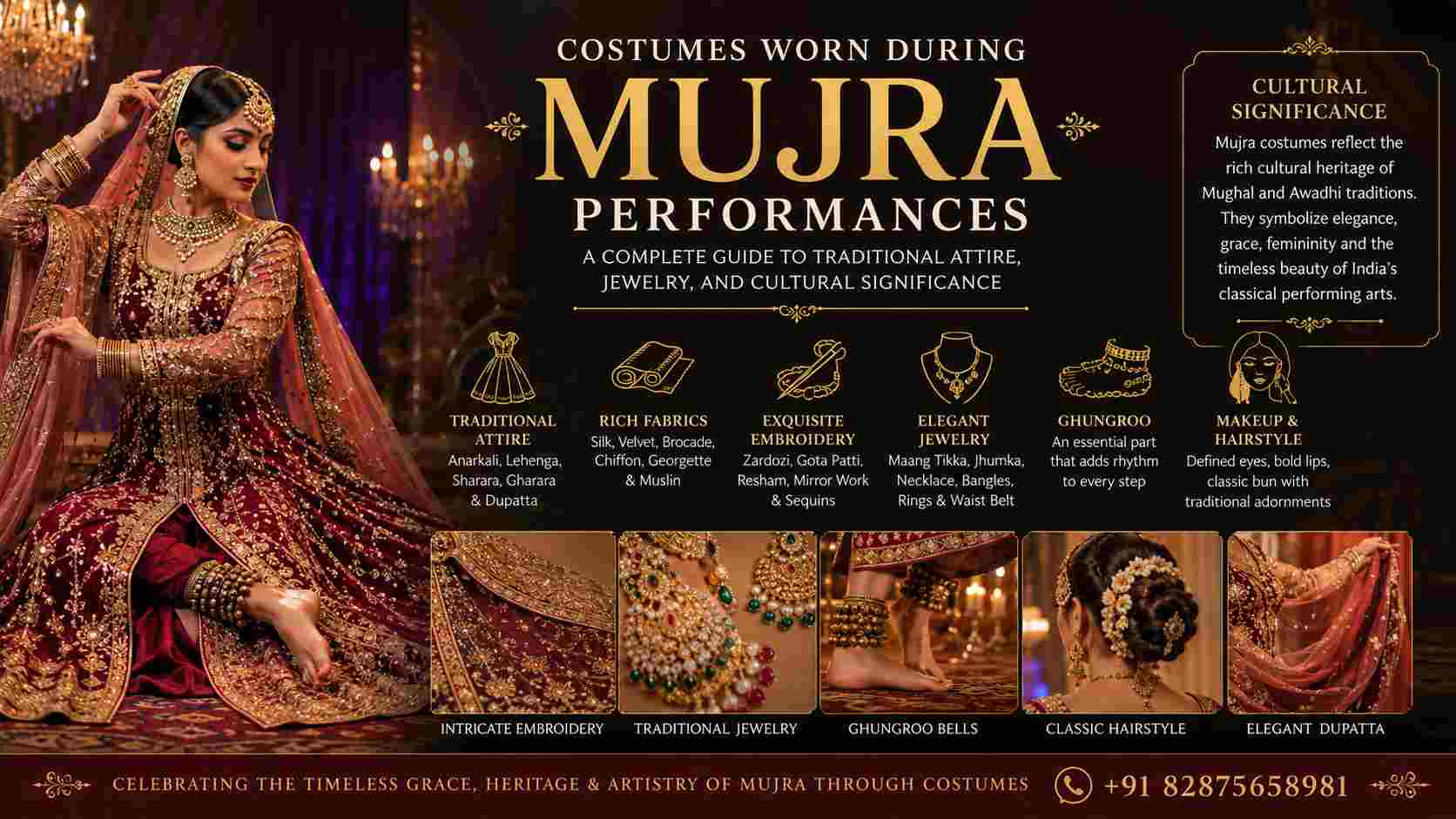
The costumes worn during mujra performances are among the most recognizable aspects of this historic North Indian performance tradition. Over centuries, mujra evolved in the royal courts of the Mughal Empire and later flourished in the cultural centers of Lucknow, Delhi, and Lahore. While music, poetry, and dance form the heart of a mujra performance, the costume plays an equally important role in expressing elegance, refinement, and artistic identity.
Traditional mujra attire was never designed merely for decoration. Every garment, ornament, color, and accessory contributed to the storytelling, rhythm, and visual appeal of the performance. The graceful movement of flowing fabrics, the sparkle of jewelry under candlelight, and the rhythmic sound of anklets all worked together to enhance the dancer’s expressions and footwork. Today, these costumes continue to inspire classical dance performances, historical films, theatre productions, fashion designers, and cultural festivals across South Asia.
Understanding the costumes worn during mujra performances offers valuable insight into India’s rich artistic heritage, traditional craftsmanship, and the influence of Mughal aesthetics on dance and fashion.
The Historical Evolution of Mujra Costumes
The costumes associated with mujra evolved over several centuries. During the Mughal era, court performers wore luxurious garments made from silk, velvet, brocade, muslin, and fine cotton. These costumes reflected the sophistication of royal courts, where artistic presentation was considered as important as technical skill.
As the art developed in the courts of Awadh, especially in Lucknow, clothing became even more refined. Designers emphasized flowing silhouettes, intricate embroidery, rich colors, and elegant draping. The costumes allowed dancers to perform graceful spins while maintaining modesty and dignity.
Unlike theatrical costumes designed purely for spectacle, traditional mujra attire balanced comfort, movement, elegance, and cultural symbolism. Every layer had a functional as well as aesthetic purpose.
The Traditional Anarkali Dress in Mujra
Among all garments associated with mujra, the Anarkali dress remains the most iconic. Characterized by its long, flowing silhouette and wide flare, the Anarkali creates beautiful circular movements when the dancer spins.
The fitted bodice highlights graceful posture, while the voluminous skirt enhances visual appeal during turns and expressive choreography. Depending on regional traditions, Anarkalis may feature:
- Heavy zari embroidery
- Handcrafted zardozi work
- Sequins and mirror embellishments
- Stone detailing
- Thread embroidery
- Gota patti decoration
- Fine lace borders
The flowing nature of the Anarkali complements classical dance movements and contributes significantly to the elegance associated with mujra performances.
Lehenga Choli in Traditional Mujra Performances
Another popular costume consists of the lehenga choli paired with an ornate dupatta. This outfit became especially common during festive performances and royal celebrations.
The lehenga is often designed with:
- Wide circular flare
- Heavy embroidered borders
- Silk or brocade fabric
- Gold or silver threadwork
The fitted choli provides structure while allowing comfortable arm movements for graceful gestures. The dupatta is draped carefully to enhance elegance without restricting dance movements.
This combination creates a regal appearance that reflects the grandeur of historical court culture.
Sharara and Gharara Costumes
Shararas and ghararas are closely associated with Lucknow’s royal fashion and remain popular choices for classical mujra performances.
A sharara features wide-legged trousers that resemble a flowing skirt during movement. A gharara includes fitted fabric around the thighs before dramatically flaring below the knees.
Both garments allow unrestricted footwork while creating visually appealing movement synchronized with rhythmic dance patterns. Rich embroidery along the borders adds further sophistication.
These traditional outfits continue to inspire bridal fashion and luxury ethnic wear today.
The Importance of the Dupatta
The dupatta serves both practical and symbolic purposes in mujra costumes. It completes the overall appearance while contributing to graceful stage movements.
Traditional dupattas are often crafted from:
- Chiffon
- Organza
- Net
- Silk
- Georgette
Decorative features include:
- Sequins
- Zari borders
- Mirror work
- Pearl embellishments
- Gota lace
The elegant handling of the dupatta often becomes part of the performance itself, adding refinement to expressive gestures.
Rich Fabrics Used in Mujra Costumes
Fabric selection has always been central to the beauty of mujra attire. Royal performers traditionally wore premium textiles that reflected wealth and artistic prestige.
Common fabrics include:
Silk
Silk provides luxurious texture, graceful draping, and a subtle sheen that catches stage lighting beautifully.
Velvet
Velvet became especially popular during winter court performances because of its rich appearance and regal elegance.
Brocade
Brocade fabrics woven with metallic threads were commonly reserved for elite performers entertaining royal audiences.
Chiffon and Georgette
Modern performers often prefer chiffon and georgette because they are lightweight, breathable, and allow unrestricted movement.
Cotton and Muslin
Historically, fine cotton and muslin were worn during informal gatherings or warmer seasons.
The choice of fabric significantly influences both comfort and visual presentation.
Traditional Embroidery Techniques
Mujra costumes showcase some of India’s finest embroidery traditions.
Popular decorative techniques include:
Zardozi
Metallic gold and silver thread embroidery creates luxurious floral and geometric patterns.
Gota Patti
Originating in Rajasthan, gota patti adds shimmering decorative ribbons to garments.
Resham Embroidery
Silk thread embroidery introduces vibrant floral designs and intricate detailing.
Mirror Work
Small reflective mirrors enhance stage visibility while creating sparkling visual effects.
Sequin Embellishments
Sequins provide subtle brilliance under theatrical lighting without overpowering the costume.
These handcrafted details often require hundreds of hours of skilled craftsmanship.
Jewelry That Complements Mujra Costumes
Jewelry forms an essential part of traditional mujra attire. Each ornament contributes to the overall elegance while highlighting facial expressions and graceful movements.
Popular jewelry includes:
- Maang tikka
- Jhumka earrings
- Choker necklaces
- Long layered necklaces
- Nose rings
- Bangles
- Armlets
- Finger rings
- Waist belts
- Hair ornaments
Many pieces feature pearls, kundan work, gemstones, and gold-plated detailing inspired by Mughal artistry.
The Cultural Importance of Ghungroo
No discussion of mujra costumes is complete without mentioning the ghungroo.
Ghungroo are strings of small metallic bells tied around the ankles. Their rhythmic sound synchronizes with intricate footwork and helps audiences appreciate the dancer’s precision.
Beyond musical function, ghungroo symbolize discipline, dedication, and mastery of classical dance techniques. Dancers traditionally earn the privilege of wearing them after rigorous training.
The sound of ghungroo remains one of the defining elements of classical Indian dance performances.
Makeup and Hairstyling
Traditional mujra presentation extends beyond clothing.
Classic makeup often includes:
- Defined eyes with kohl
- Elegant eyeliner
- Rich lipstick shades
- Soft contouring
- Decorative bindis
Hairstyles frequently feature neatly tied buns decorated with:
- Fresh jasmine flowers
- Gajra garlands
- Decorative hairpins
- Pearl accessories
These elements enhance facial expressions, which play a crucial role in classical dance storytelling.
Colors Traditionally Used in Mujra Costumes
Color selection carries artistic and cultural significance.
Popular colors include:
- Deep red
- Maroon
- Emerald green
- Royal blue
- Ivory
- Gold
- Pink
- Burgundy
- Purple
- Mustard
Gold embroidery often contrasts beautifully against darker fabrics, creating a luxurious appearance suitable for royal-style performances.
Regional Influences on Mujra Fashion
Different regions contributed distinctive elements to mujra costumes.
Lucknow became famous for chikankari embroidery, elegant ghararas, and delicate craftsmanship.
Delhi reflected stronger Mughal influences with richly embroidered Anarkalis and luxurious jewelry.
Lahore emphasized vibrant colors, elaborate embellishments, and artistic tailoring.
These regional variations enriched the diversity of traditional mujra fashion while preserving shared cultural roots.
Modern Adaptations of Mujra Costumes
Contemporary performers often adapt traditional attire to suit modern stages and audiences while respecting historical inspiration.
Today’s costumes may include:
- Lightweight fabrics
- Breathable linings
- Simplified embroidery
- Comfortable tailoring
- Enhanced durability for touring productions
Fashion designers also reinterpret classic silhouettes for bridal collections, festive wear, and cultural events, ensuring that the elegance of traditional mujra costumes continues to influence modern Indian fashion.
Costume Design and Dance Performance
A well-designed costume supports the dancer’s performance rather than restricting it.
Professional costume designers consider factors such as:
- Freedom of movement
- Weight distribution
- Fabric flow
- Stage lighting
- Audience visibility
- Comfort during long performances
- Durability
- Historical authenticity
The costume becomes an extension of the performance, enhancing each graceful movement and expressive gesture.
Preserving the Heritage of Mujra Costumes
Museums, cultural institutions, historians, and performing arts organizations continue to preserve examples of traditional mujra attire. Hand embroidery techniques such as zardozi, chikankari, and gota patti remain valuable parts of India’s textile heritage. By documenting these garments and supporting skilled artisans, cultural organizations help ensure that the craftsmanship behind mujra costumes is passed on to future generations.
Educational workshops, classical dance academies, heritage festivals, and historical exhibitions also play an important role in showcasing the artistry of these costumes. Their continued appreciation highlights not only the beauty of the garments but also the rich traditions of music, dance, poetry, and craftsmanship that they represent.
Conclusion
The costumes worn during mujra performances represent far more than elegant clothing. They embody centuries of artistic evolution, Mughal courtly aesthetics, masterful textile craftsmanship, and the enduring traditions of Indian classical performance culture. From flowing Anarkalis and regal ghararas to intricate embroidery, sparkling jewelry, and the rhythmic sound of ghungroo, every element contributes to the visual and cultural richness of the performance.
Today, these costumes remain an important symbol of South Asia’s artistic heritage. Whether seen in classical dance recitals, theatre, cinema, museum collections, or contemporary fashion, they continue to celebrate elegance, craftsmanship, and the timeless connection between costume and performance art.