
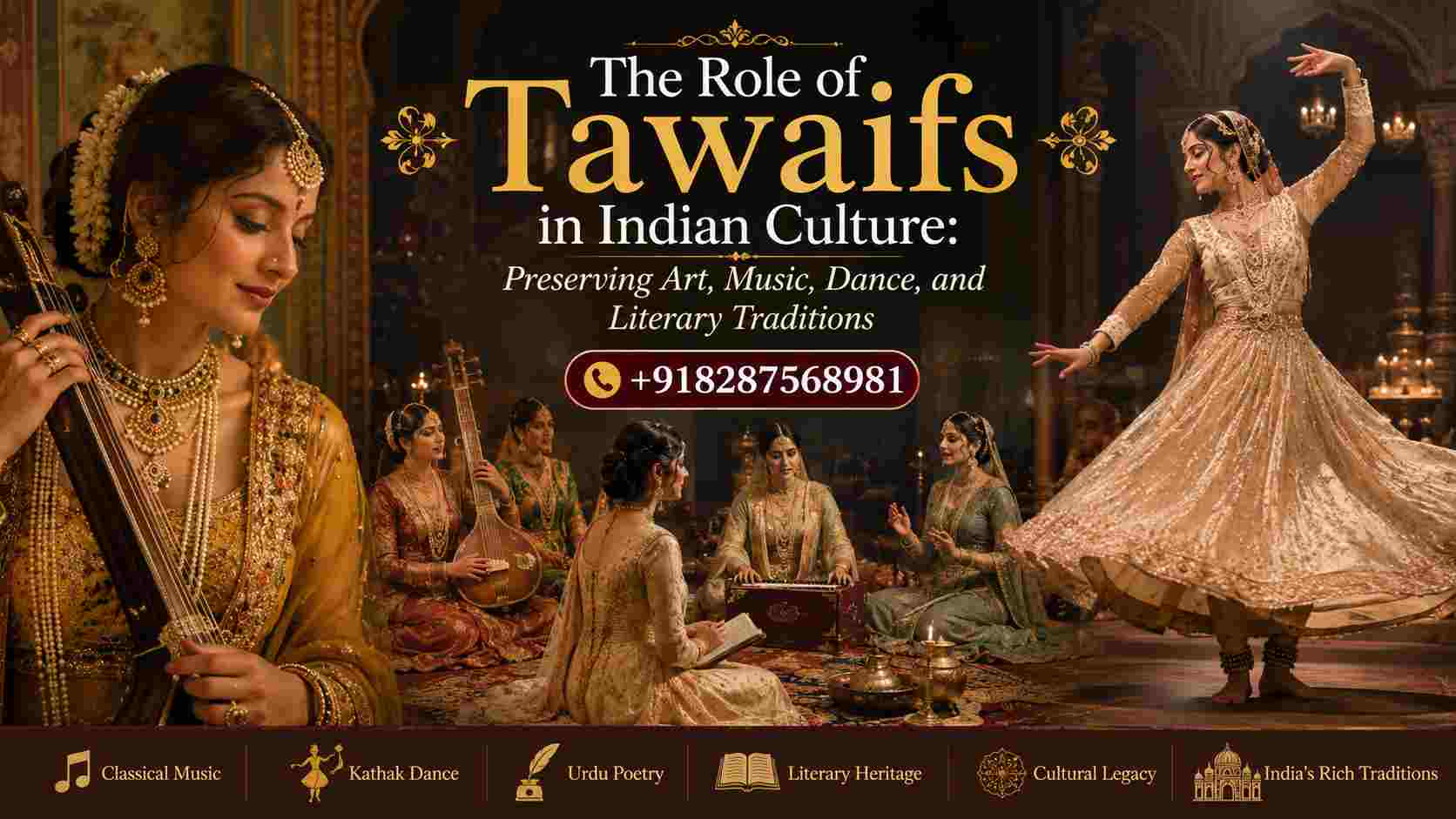
The role of tawaifs in Indian culture is far more significant and complex than many modern interpretations suggest. Throughout the Mughal era and well into the nineteenth century, tawaifs were respected performers, educators, poets, musicians, dancers, and cultural ambassadors who contributed immensely to India’s artistic heritage. Their salons, often known as kothas, served as vibrant centers where classical music, Kathak dance, Urdu poetry, etiquette, and refined conversation flourished.
Unfortunately, over time, changing political systems, colonial attitudes, and shifting social values transformed public perceptions of tawaifs. Today, many people associate the word solely with entertainment or prostitution, overlooking their remarkable contributions to Indian classical arts. Exploring the role of tawaifs in Indian culture helps restore historical balance and recognizes the influence these women had on music, literature, fashion, dance, and social refinement.
Who Were the Tawaifs?
Tawaifs were highly educated women who specialized in performing classical music, Kathak dance, ghazals, thumri, dadra, kajri, and other sophisticated forms of artistic expression. They often came from families where music and dance had been passed down through generations.
Unlike common misconceptions, becoming a respected tawaif required years of rigorous training. Students learned:
- Hindustani classical music
- Kathak dance
- Urdu and Persian literature
- Poetry recitation
- Conversation and etiquette
- Musical instruments
- Courtly manners
- Storytelling
- Vocal performance
Their education made them among the most cultured women of their time, admired for their intelligence as well as artistic talent.
Origins of the Tawaif Tradition
The roots of the tawaif tradition can be traced to medieval India, where royal courts encouraged the development of music and dance. During the Mughal Empire, emperors and regional rulers became patrons of performing arts, creating an environment in which talented women could thrive.
Cities such as Delhi, Lucknow, Agra, Banaras, Hyderabad, Lahore, and Murshidabad became famous cultural centers where tawaifs entertained nobility while preserving artistic traditions.
Their performances were not merely entertainment but sophisticated presentations combining music, rhythm, poetry, storytelling, and graceful movement.
Tawaifs as Custodians of Indian Classical Music
One of the greatest contributions of tawaifs lies in preserving Hindustani classical music.
Many celebrated vocal traditions survived because talented tawaifs dedicated their lives to perfecting and teaching these styles. They mastered numerous genres, including:
Thumri
Thumri became one of the defining musical styles associated with tawaifs. Rich in emotion and subtle expression, it allowed singers to combine melody with poetic interpretation.
Dadra
Dadra songs expressed romance, longing, and devotion using graceful musical phrasing that became popular in royal courts.
Ghazals
Tawaifs elevated Urdu ghazals through expressive singing and careful attention to poetic meaning.
Kajri and Chaiti
Seasonal folk-inspired forms were also preserved by tawaifs, enriching India’s diverse musical heritage.
Without these performers, many regional musical traditions might have faded over time.
The Connection Between Tawaifs and Kathak
Kathak, one of India’s major classical dance forms, shares a deep historical relationship with tawaifs.
Originally developed by temple storytellers, Kathak evolved significantly during the Mughal period. Tawaifs contributed to refining:
- Graceful footwork
- Facial expressions
- Rhythmic complexity
- Elegant gestures
- Costume traditions
- Stage presentation
- Emotional storytelling
Many of today’s Kathak techniques reflect centuries of artistic refinement in the salons of accomplished performers.
Modern Kathak continues to honor this rich legacy while emphasizing its classical foundations.
Tawaifs as Teachers of Etiquette and Culture
Beyond music and dance, tawaifs were respected for teaching refined social behavior.
Young nobles often visited their salons to learn:
- Respectful conversation
- Poetry appreciation
- Court etiquette
- Language skills
- Proper manners
- Music appreciation
- Literary discussion
- Cultural sophistication
This educational role distinguished elite tawaifs from ordinary entertainers and made them influential figures in elite society.
Literary Contributions of Tawaifs
Many tawaifs possessed remarkable literary knowledge.
They studied:
- Urdu poetry
- Persian literature
- Hindi verse
- Classical storytelling
- Ghazals
- Nazms
- Rekhti poetry
Some composed original works while others became celebrated interpreters of famous poets.
Their salons frequently hosted poets, scholars, musicians, and intellectuals who exchanged ideas and artistic innovations.
Tawaifs and the Growth of Urdu Culture
The flourishing of Urdu language owes much to the patronage and participation of tawaifs.
They helped popularize:
- Elegant pronunciation
- Refined vocabulary
- Classical poetry
- Musical recitation
- Literary gatherings
- Cultural dialogue
Their performances introduced audiences to celebrated poets while encouraging appreciation for sophisticated language and expression.
Fashion and Style Influenced by Tawaifs
Tawaifs also influenced clothing, jewelry, and personal presentation.
Their elegant appearance popularized:
- Anarkalis
- Shararas
- Ghararas
- Churidars
- Silk dupattas
- Intricate embroidery
- Traditional jewelry
- Perfumes
- Decorative hairstyles
These fashions later spread into broader society and continue to inspire Indian bridal and festive wear.
Centers of Tawaif Culture
Several Indian cities became renowned for their flourishing tawaif traditions.
Lucknow
Lucknow became synonymous with refined culture, Kathak, Urdu poetry, and sophisticated musical gatherings.
Delhi
As an imperial capital, Delhi attracted many accomplished performers who entertained nobles and scholars.
Banaras
Banaras developed a distinctive style emphasizing devotional and semi-classical music.
Hyderabad
The princely state supported music, dance, literature, and artistic innovation through royal patronage.
Each city developed unique artistic traditions while contributing to India’s broader cultural landscape.
The Decline of the Tawaif Tradition
The decline of the tawaif institution resulted from several historical developments.
British colonial authorities often misunderstood or deliberately stigmatized tawaifs, grouping them with prostitution despite their significant artistic roles. Colonial moral reforms, legal restrictions, and changing social attitudes reduced royal patronage and diminished the status of many performers.
The abolition of princely courts after independence further weakened traditional systems of artistic support.
As a result, many historic kothas disappeared, and valuable artistic traditions faced decline.
Tawaifs in Indian Cinema
Indian cinema has introduced audiences to fictionalized portrayals of tawaifs through memorable films.
These stories often depict:
- Classical dance
- Musical excellence
- Poetry
- Romance
- Social struggles
- Artistic dedication
- Courtly culture
- Historical settings
While cinematic portrayals sometimes romanticize history, they have also encouraged renewed interest in India’s performing arts and cultural heritage.
Common Misconceptions About Tawaifs
Many misconceptions continue to surround the history of tawaifs.
Some assume they were simply dancers or entertainers. In reality, respected tawaifs were accomplished artists who underwent years of formal training.
Others overlook their contributions to education, literature, music, and etiquette. Historical records reveal that many enjoyed considerable prestige, particularly during periods of strong royal patronage.
Recognizing these distinctions helps provide a more accurate understanding of their place in Indian history.
Cultural Legacy of Tawaifs
Although the traditional institution has largely disappeared, its influence remains visible across Indian culture.
Its legacy survives in:
- Hindustani classical music
- Kathak dance
- Ghazal singing
- Thumri traditions
- Urdu literature
- Classical fashion
- Performance etiquette
- Musical pedagogy
Many respected musicians and dancers continue to acknowledge the historical importance of tawaifs in preserving these art forms.
Modern Scholarly Interest
Historians, cultural researchers, and performing artists increasingly study the lives of tawaifs to better understand India’s artistic heritage.
Their research explores:
- Women’s contributions to cultural history
- Classical music traditions
- Dance evolution
- Literary networks
- Patronage systems
- Social history
- Urban culture
- Colonial transformations
These studies encourage a more nuanced view that recognizes both the achievements and the challenges faced by these women.
Why the History of Tawaifs Still Matters
Learning about tawaifs reminds us that cultural traditions are often shaped by individuals whose contributions have been misunderstood or forgotten. Their dedication to preserving music, dance, poetry, and refined artistic expression helped sustain important aspects of Indian civilization through centuries of political and social change.
Their history also highlights the importance of preserving intangible cultural heritage—skills, performances, and artistic knowledge that are passed from one generation to the next.