
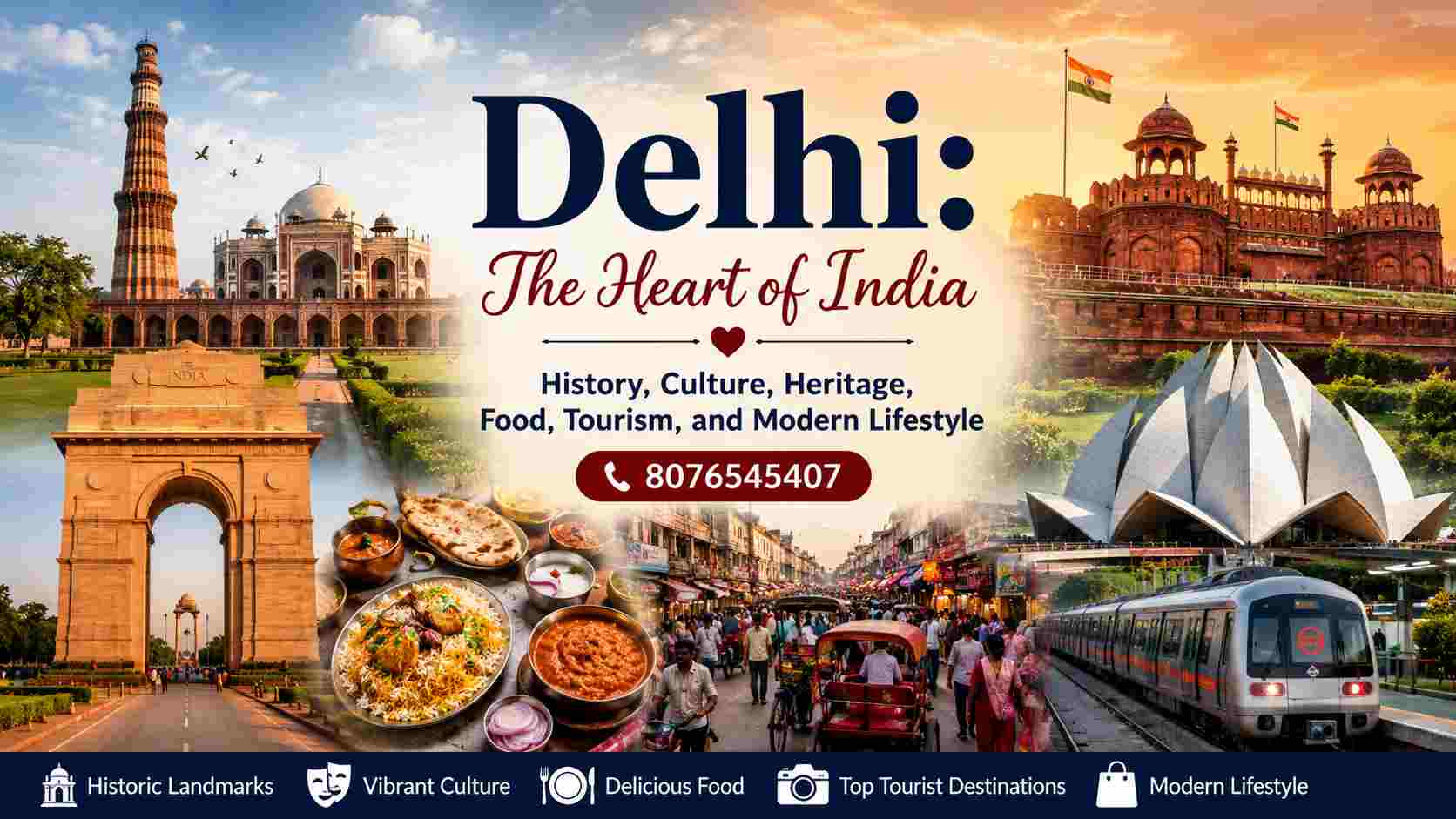
Delhi, the capital city of India, is one of the oldest continuously inhabited cities in the world. Known for its fascinating blend of ancient heritage and modern development, Delhi has served as the seat of numerous empires, kingdoms, and governments over thousands of years. Today, it stands as India’s political capital while also being a major center for commerce, education, tourism, technology, fashion, and culture.
Every year, millions of domestic and international tourists visit Delhi to explore its magnificent historical monuments, vibrant markets, spiritual landmarks, world-famous cuisine, luxurious hotels, and thriving urban lifestyle. From the majestic Red Fort to the peaceful Lotus Temple, Delhi offers an unforgettable experience for every traveler.
This comprehensive guide explores everything you need to know about Delhi, including its history, famous attractions, culture, food, transportation, shopping destinations, festivals, education, economy, and reasons why it remains one of India’s most important cities.
The History of Delhi
Delhi has a history spanning more than 2,500 years. According to ancient Indian traditions, the city is believed to be associated with Indraprastha, the legendary capital of the Pandavas mentioned in the Mahabharata.
Over centuries, Delhi became the center of several powerful dynasties including the Tomars, Chauhans, Delhi Sultanate, Mughals, and eventually the British Empire. Every ruler left behind architectural masterpieces, forts, palaces, mosques, gardens, and cultural traditions that continue to define Delhi’s identity today.
The Mughal era transformed Delhi into one of the richest cities in Asia. Shah Jahan established Shahjahanabad, now known as Old Delhi, where magnificent monuments like the Red Fort and Jama Masjid still stand proudly.
During British rule, New Delhi was designed by Sir Edwin Lutyens and Herbert Baker and officially became India’s capital in 1931. After India’s independence in 1947, Delhi evolved rapidly into the political and economic powerhouse of modern India.
Why Delhi Is Famous
Delhi is renowned for numerous reasons that make it one of the world’s most fascinating cities.
It is the capital of the world’s largest democracy and houses Parliament House, Rashtrapati Bhavan, the Supreme Court, and the offices of the Prime Minister and central government ministries.
Delhi is equally famous for its UNESCO World Heritage Sites, bustling street markets, luxury shopping malls, iconic street food, educational institutions, multinational corporations, and vibrant nightlife.
The city perfectly combines centuries-old traditions with cutting-edge infrastructure, making it unique among global metropolitan cities.
Geography and Climate of Delhi
Located in northern India along the banks of the Yamuna River, Delhi enjoys a strategic geographical position that connects northern, western, and eastern India.
Delhi experiences four distinct seasons:
- Summer (April–June)
- Monsoon (July–September)
- Autumn (October–November)
- Winter (December–February)
The winter season is particularly popular among tourists due to pleasant weather, while spring showcases blooming gardens and colorful parks across the city.
Historical Monuments in Delhi
Delhi is home to some of India’s most iconic monuments that showcase exceptional architecture and rich history.
The Red Fort symbolizes India’s independence and hosts the Prime Minister’s Independence Day speech every year.
Qutub Minar, one of the tallest brick minarets in the world, attracts architecture enthusiasts from across the globe.
Humayun’s Tomb inspired the design of the Taj Mahal and represents early Mughal architecture.
India Gate serves as a national war memorial honoring soldiers who sacrificed their lives.
Purana Qila, Safdarjung Tomb, Agrasen ki Baoli, and Lodhi Gardens further enrich Delhi’s historical landscape.
These landmarks preserve centuries of Indian history and continue to inspire millions of visitors annually.
Religious Places in Delhi
Delhi welcomes people from every religion and showcases remarkable religious harmony.
The magnificent Akshardham Temple is celebrated for its intricate carvings, exhibitions, and spiritual atmosphere.
Lotus Temple attracts visitors from all faiths because of its peaceful environment and distinctive lotus-inspired architecture.
Jama Masjid remains one of India’s largest mosques and an architectural masterpiece of the Mughal period.
Bangla Sahib Gurudwara serves thousands of visitors daily with its free community kitchen and serene surroundings.
ISKCON Temple, Chhatarpur Temple, Sacred Heart Cathedral, and numerous Jain temples further reflect Delhi’s multicultural spirit.
Delhi’s Rich Culture
Delhi’s culture is a beautiful combination of ancient traditions and modern lifestyles.
People from every Indian state have settled in Delhi, creating an extraordinary multicultural environment. Festivals from every region are celebrated enthusiastically, making Delhi one of India’s most culturally diverse cities.
Classical dance performances, music festivals, literary events, theatre productions, fashion shows, and art exhibitions take place throughout the year.
The city’s museums preserve India’s artistic and historical treasures, while contemporary art galleries highlight modern creativity.
Famous Food of Delhi
Delhi is often regarded as India’s food capital.
The city’s culinary landscape ranges from traditional Mughlai cuisine to modern international restaurants.
Old Delhi remains famous for its authentic street food including:
- Chole Bhature
- Parathas
- Kebabs
- Butter Chicken
- Nihari
- Jalebi
- Rabri
- Kachori
- Golgappa
- Aloo Tikki
- Kulfi
- Lassi
Food lovers also enjoy luxury fine dining restaurants serving global cuisines including Italian, Japanese, Chinese, Korean, Mediterranean, Mexican, Thai, and Continental dishes.
Delhi’s food culture reflects centuries of culinary innovation influenced by royal kitchens, regional migrations, and international flavors.
Shopping in Delhi
Delhi is one of India’s largest shopping destinations.
Traditional markets coexist alongside luxury malls, offering something for every budget.
Popular shopping areas include Chandni Chowk, Connaught Place, Sarojini Nagar, Lajpat Nagar, Janpath, Karol Bagh, Khan Market, South Extension, and Dilli Haat.
Modern malls such as Select Citywalk, DLF Promenade, DLF Emporio, Pacific Mall, Vegas Mall, and Ambience Mall feature premium international and Indian brands.
Visitors can purchase clothing, jewelry, handicrafts, electronics, books, carpets, home décor, antiques, leather products, and traditional Indian textiles.
Tourism in Delhi
Delhi serves as the gateway to North India and forms part of India’s famous Golden Triangle tourist circuit alongside Agra and Jaipur.
Millions of tourists visit Delhi every year to experience its historical monuments, cultural heritage, museums, parks, temples, food streets, shopping markets, and entertainment venues.
Popular tourist attractions include:
- Red Fort
- India Gate
- Rashtrapati Bhavan
- Qutub Minar
- Humayun’s Tomb
- Lotus Temple
- Akshardham Temple
- Jama Masjid
- Chandni Chowk
- Raj Ghat
- National Museum
- National Rail Museum
- Lodhi Garden
- Hauz Khas Village
- Connaught Place
Delhi offers activities suitable for families, solo travelers, photographers, students, historians, food lovers, and international visitors alike.
Transportation in Delhi
Delhi has one of India’s most advanced transportation systems.
The Delhi Metro connects nearly every major residential and commercial area with fast, affordable, and environmentally friendly transportation.
The city also offers extensive bus services, taxis, auto-rickshaws, app-based cab services, electric vehicles, and bicycle-sharing programs.
Indira Gandhi International Airport ranks among the busiest airports in Asia and provides excellent domestic and international connectivity.
Delhi’s railway stations connect the city with every region of India.
The expanding network of expressways and highways has significantly improved road transportation.
Education in Delhi
Delhi is home to some of India’s most prestigious educational institutions.
Thousands of students from across India and abroad come here for higher education.
The city houses renowned universities, engineering colleges, medical colleges, management institutes, law schools, research centers, and international schools.
Its academic ecosystem supports innovation, scientific research, entrepreneurship, and professional development across diverse disciplines.
Economy of Delhi
Delhi possesses one of India’s largest urban economies.
Major industries include:
- Information Technology
- Finance
- Banking
- Government Administration
- Tourism
- Hospitality
- Retail
- Healthcare
- Real Estate
- Education
- Telecommunications
- Manufacturing
- Logistics
- Media
The city attracts significant domestic and foreign investment due to its strategic location, excellent infrastructure, skilled workforce, and large consumer market.
Green Spaces in Delhi
Despite being a bustling metropolis, Delhi offers numerous parks and gardens.
Lodhi Garden, Nehru Park, Garden of Five Senses, Deer Park, Sunder Nursery, Buddha Jayanti Park, and the Ridge Forest provide refreshing escapes from urban life.
These green spaces promote biodiversity, recreation, fitness, photography, birdwatching, and family outings.
Tree plantation drives and environmental initiatives continue to improve Delhi’s ecological sustainability.
Festivals Celebrated in Delhi
Delhi celebrates festivals with remarkable enthusiasm.
Major festivals include:
- Diwali
- Holi
- Eid
- Christmas
- Guru Nanak Jayanti
- Durga Puja
- Navratri
- Dussehra
- Independence Day
- Republic Day
The Republic Day Parade showcases India’s military strength, cultural diversity, technological achievements, and national pride, attracting visitors from around the world.
Arts, Entertainment, and Nightlife
Delhi offers a vibrant entertainment scene.
The city hosts concerts, theatre performances, stand-up comedy shows, music festivals, literature festivals, film screenings, and fashion events throughout the year.
Areas like Connaught Place, Hauz Khas Village, Aerocity, Saket, and Greater Kailash feature cafés, restaurants, lounges, cultural venues, and live music spaces that cater to diverse tastes.
Healthcare Facilities in Delhi
Delhi has some of India’s finest healthcare infrastructure.
The city offers advanced government and private hospitals equipped with modern medical technology and highly qualified healthcare professionals.
Specialized treatment centers attract patients from across India and overseas for cardiology, oncology, orthopedics, neurology, organ transplantation, and other advanced medical services.
Why People Love Living in Delhi
Delhi offers opportunities that few Indian cities can match.
Residents benefit from world-class educational institutions, excellent healthcare, strong employment prospects, extensive public transport, diverse cultural experiences, premium shopping, and outstanding dining options.
The city’s cosmopolitan atmosphere welcomes people from every background, creating a dynamic and inclusive environment.
Although Delhi faces challenges such as traffic congestion and air pollution, continuous infrastructure development and environmental initiatives aim to improve the quality of urban life.
Future Development of Delhi
Delhi continues to modernize through large-scale infrastructure projects.
Expansion of metro lines, smart city initiatives, improved road networks, electric mobility, renewable energy adoption, digital governance, and urban redevelopment projects are shaping the city’s future.
New commercial districts, convention centers, green buildings, and sustainable urban planning initiatives are expected to strengthen Delhi’s position as a leading global metropolis.
Travel Tips for Visiting Delhi
Visitors can enjoy a smoother experience by planning ahead.
The best months to visit are October through March when the weather is pleasant. Comfortable walking shoes are recommended because many historical sites require extensive walking. Using the Delhi Metro is often the fastest way to travel between major attractions. Keeping drinking water, sun protection during warmer months, and respecting local customs at religious sites contribute to a comfortable and enjoyable trip.